Who Gets the Good Table?
Bad tippers get a code name. VIPs get a tag. Here’s what the host sees when you walk in.

The first time I tried iara, it wasn’t even a restaurant yet.
I was sitting in Chef Vitor Mendes’ apartment in Brooklyn while he cooked a first taste of what it would become.
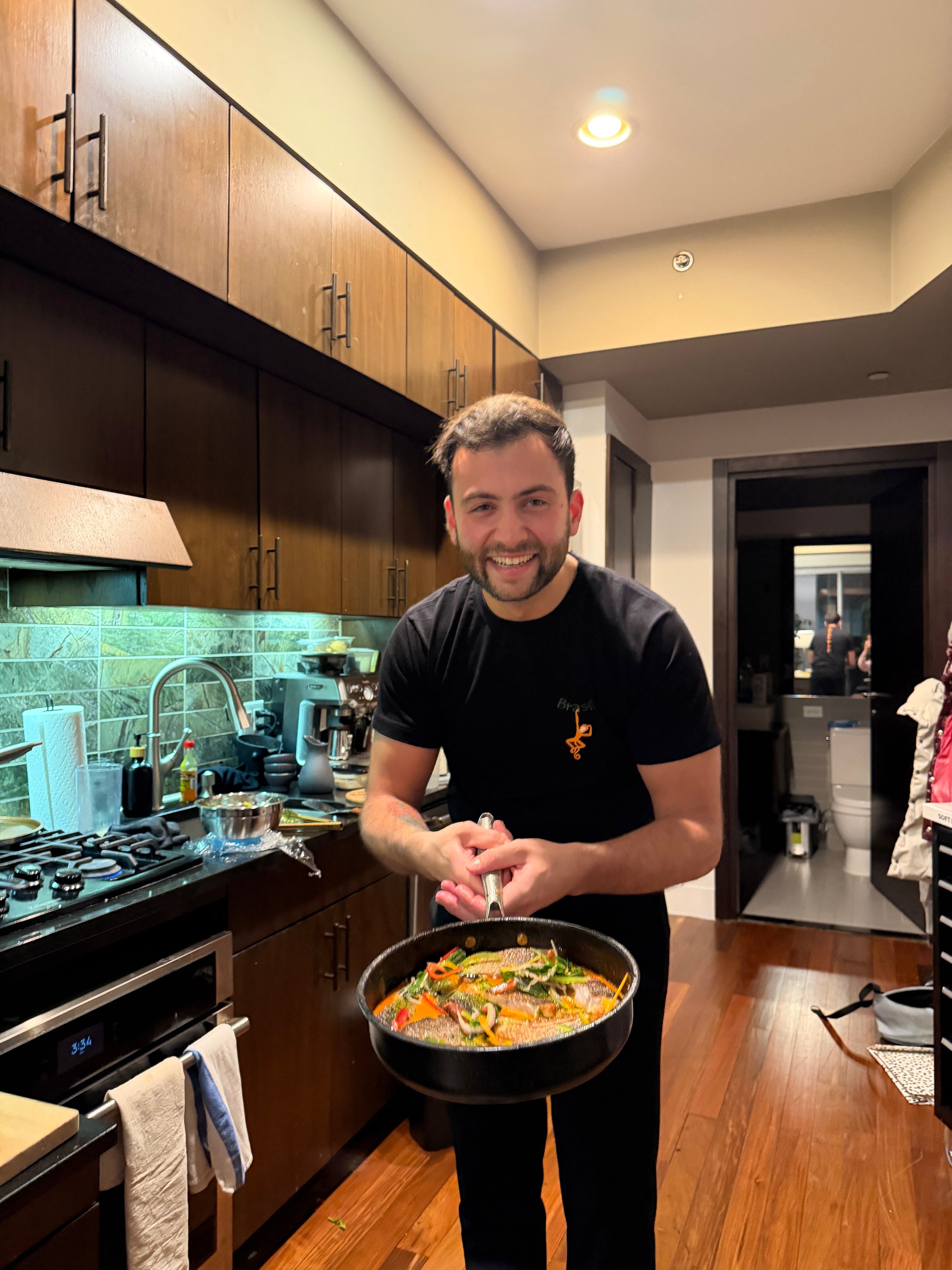
Let me rewind.
18 months ago, when I was still figuring out what First Seating could become, I kept asking chef friends in New York who I should be paying attention to.
Vitor’s name came up more than once.
He was still Chef de Cuisine at Theodora when we met for coffee. He told me about the restaurant he dreamed of opening, a deeply personal homage to Brazil, where he grew up.
We started doing dinners together before either of our ideas had fully taken shape.
Now iara has been open six weeks. Helen Rosner of The New Yorker has given it a glowing review, and a friend sent me a video of people lining up around the block.
I couldn’t be prouder of him.
And watching those lines form got me thinking…
Who gets the good table when
everyone wants one?
For years, I took a bad table personally. Then I started shadowing host stands.
The notes nobody sees
Behind the host stand is a screen most guests never see.
Next to some names are tags. VIP. Regular. Friend of the house. Big spender. Bad tipper.
Sometimes there’s a favorite table, a preferred server, or a note about what happened during the last visit.
The restaurant remembers more than you think. Those notes can influence who gets the corner banquette, who gets an extra course, and who gets a reservation that never appeared online.
But here’s what surprised me.
The person spending the most isn’t necessarily the person the restaurant values most.
The big spender pays for tonight. The regular fills a slow Tuesday, notices when the appetizer changes, knows their server’s story, and comes back in January.
Then there’s the guest restaurants quietly love most: the well-connected regular. Not necessarily for what they spend. For who they bring.
A restaurant might make a fortune from someone who barely orders a second glass of wine.
That’s the part the reservation apps can’t quite capture.
The table is for sale
There are now several ways to get a table you weren’t offered.
Be fast. Refresh at 10am. Turn on Notify. Wait for someone else’s plans to fall apart. It doesn’t reward taste. It rewards free time.
Trade. Swap reservations with strangers on apps like ResX.
Spend. Run enough through the right credit card and a table appears. Hospitality, sponsored by your bank.
Prepay. Commit to a minimum before you sit down. When demand goes up, so can the minimum. Apps like Dorsia turn $25,000 prepaid upfront into Fun Coupons, that can expire if unused. Even your own money needs a reservation.
Or be known.
That last one is interesting. Because being known used to mean someone inside the restaurant decided you mattered. Now, increasingly, a third party can make that decision for them.
A bank negotiates access. A platform reserves inventory for premium customers. A concierge gets an allocation.
The restaurant still controls much of its dining room, but some of its most desirable seats have already been spoken for. By someone who may never have met the guest.
I understand why restaurants do it. Margins are thin. No-shows are expensive. A guaranteed check is hard to turn down.
But something changes when the person deciding who gets the table isn’t the person responsible for the room.
The restaurant gets paid. It just has a little less say in who shows up.
And the person who can afford the table isn’t always the person anyone wants sitting there.
Don’t be spaghetti
The floor keeps its own records.
At one restaurant I shadowed, the code for a bad tipper was “spaghetti.”
There was no spaghetti on the menu. Tips were pooled across the floor, so everyone who served you remembered.
What fascinates me about these notes isn’t that restaurants judge people.
Of course they do.
It’s what they choose to remember.
A guest who complains about every course. Someone who repeatedly cancels at the last minute. A regular who remembers everyone’s name. Someone who brings in people who treat the staff terribly.
A guest can be important on paper and exhausting in person. And a person nobody recognizes can become everyone’s favorite by the end of dinner.
Money can buy recognition. It can’t guarantee affection.
The people who own the room
Here’s where things get complicated.
Restaurants have always had hierarchies.
Investors. Celebrities. Critics. Friends of the chef. Regulars who have been coming since opening night.
Some get better tables. Some get dishes that aren’t on the menu. Some can text someone directly when the reservation book is full.
The difference is that these relationships used to depend more heavily on someone inside the restaurant making a judgment.
Now, some of that judgment has been turned into a product. It’s not necessarily worse. It’s certainly more efficient.
But consider what happens when a restaurant’s most desirable tables are consistently occupied by people who purchased access rather than people the restaurant would have chosen.
The dining room might be full. The checks might be enormous. But the room can lose something. Because a restaurant isn’t just selling food.
It’s deciding what kind of place it wants to be, and who helps make it that way.
A chef once told me that the guests who matter most aren’t always the ones who spend the most. They’re the ones who show up before the restaurant is famous.
Who come back when the menu changes. Who bring people who understand what the chef is trying to build. And who still come when the room isn’t the hottest reservation in New York.
Those guests become part of the restaurant’s story. You can’t manufacture that with a credit card benefit.
The wrong kind of VIP
There’s another side to being known.
Not every relationship is worth having.
The investor’s friends who take the best table every Friday, demand special treatment, and make the staff miserable aren’t necessarily an asset.
They’re a debt dressed as one.
The regular who expects the chefs to drop everything because they’ve been coming for ten years can be worse than a first-time guest. And the person with the most impressive title might be the least interesting at the table.
I’ve been thinking about this a lot as I host more dinners. The people who look most valuable on paper don’t always make the evening better.
Sometimes the person nobody knows is the one everyone wants to keep talking to. Sometimes the quiet guest changes the entire conversation with one question.
And sometimes the person who could afford every seat in the room is the person you wouldn’t invite back.
Which brings me back to the seating chart.
Who gets the good table?
You keep a seating chart too.
Who gets your time. Who gets the first call back. Who gets the seat in the meeting that matters. Let’s be honest. Most of us give it to whoever’s paying right now.
The best hosts I know do something harder. They seat for what compounds, and they’re ruthless about who those relationships bring into the room.
Fee, not filter
I’m not against paying for things. Good rooms cost money to build.
Money can be the fee. It just can’t be the filter.
The good table was never for sale. That’s what made it good.
Next essay: What new restaurants owe you, what you owe them, and what to say when the server asks how everything was.
P.S. Every essay stays free. If you want more, I’ve started a paid tier: where I’m actually eating, what to order, what to skip, and what I hear off the record.
Comments